

Cacao Leaf Tea
The term “cacao tea” has recently come to mean an infusion of cocoa shells, but, if you are fortunate enough to have access to a cacao tree, try infusing the leaves.

So many terms having to do with cacao are imprecise and confusing: cacao or cocoa, husk or shell or hull, craft or fine flavor, etc. Add to these: cacao tea and cocoa tea. In the Caribbean, cocoa tea means a spiced, whole bean chocolate drink. In a craft chocolate shop, bags of winnowed shells without beans are sold as cacao or cocoa tea. Some makers offer finely ground nibs to brew like coffee, also a form of tea. This is confusing enough without even mentioning that none of this is real tea, which is defined as leaves from the Camellia sinensis tree. I’m so accustomed to confusion in cacao terms that I admit to feeling a bit of subversive pleasure to introduce here something that will potentially obfuscate even further: cacao leaf tea.
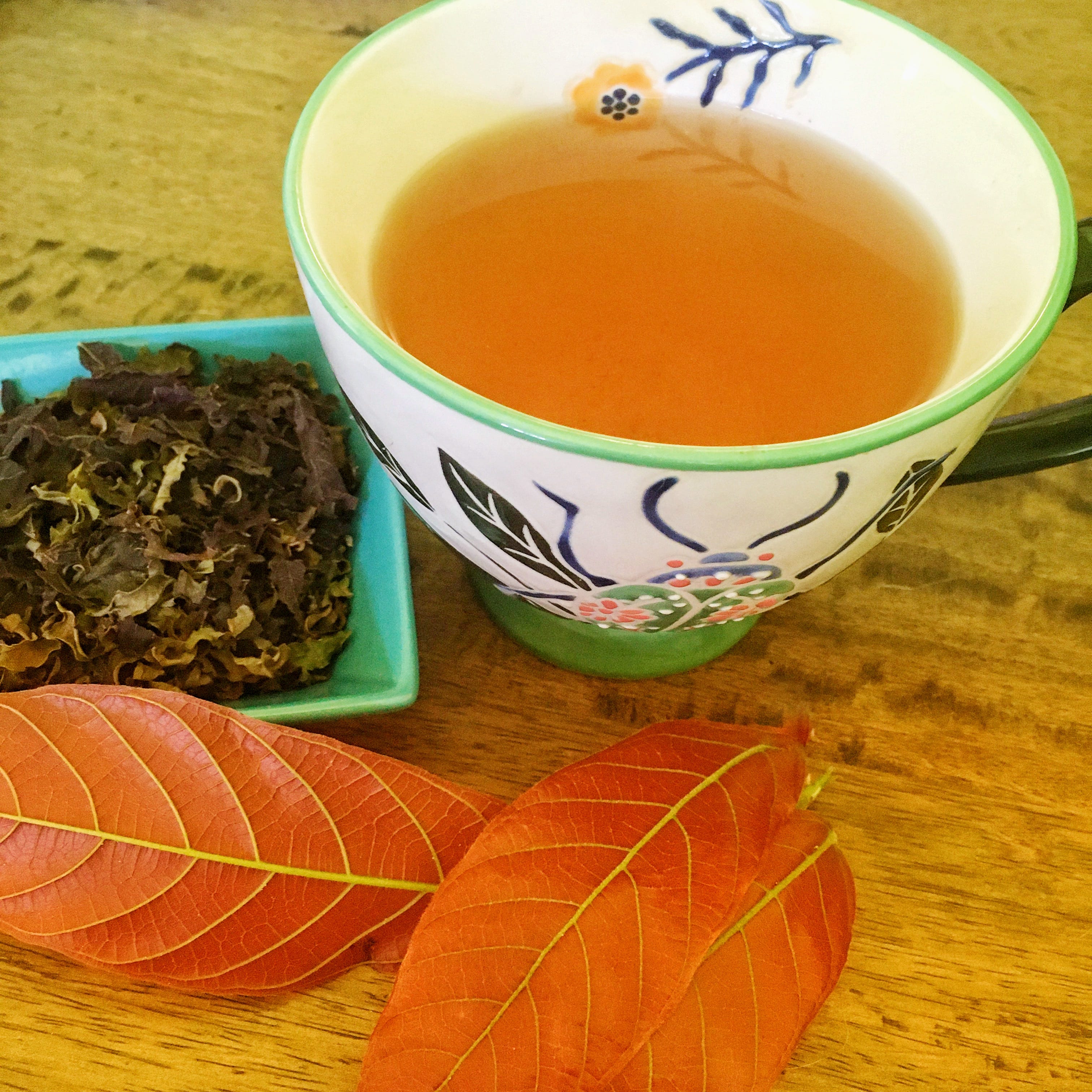
As I wrote in my book, One Cacao Tree, I came across a scientific paper written in Indonesian introducing brewed cacao leaves as a refreshing drink. Furthermore, it revealed that these leaves are packed with an impressive amount of antioxidant activity, more than green tea. Interestingly, unlike C. sinensis leaves, cacao leaves are not bitter, even when brewed for a long time.
Ten years prior to the Indonesian study, a research team in Mayasia published a paper directly comparing antioxidant molecules (primarily catechins, for which tea is known) and caffeine concentrations with cacao leaves. Like the previously mentioned paper, they also found that cacao leaves have more antioxidant molecules (although less of the famous EGCG) than green tea. Caffeine levels were a bit lower in cacao leaves than green tea. (If anyone has access to the pdf of the full paper, please send it to me. — got it, thank you Karla!)
I have been drinking cacao leaf tea almost every day for over a year. The flavor is mild, and the affect is mood and energy boosting, at least I think so. Given the research studies, I believe it is a healthy addition to my diet. Want to try yourself? You may have some questions.
Is cacao leaf tea safe?
The honest answer is that I don’t know. I assume it is. Cacao is in the Malvaceae (mallow) family. In general this family is safe; its only known poisonous member is cotton. The fact that research is looking into using the leaves as tea (see above) gives me confidence. Although the people of Mesoamerica, who have tended cacao for millennia, call on cacao leaves and flowers for medicine, they don’t seem to regularly drink cacao leaf tea. Why is that? Maybe because it isn’t as beneficial as these reports suggest or maybe because they had better sources of the benefits the leaves offer?
How do you harvest and process cacao leaves?
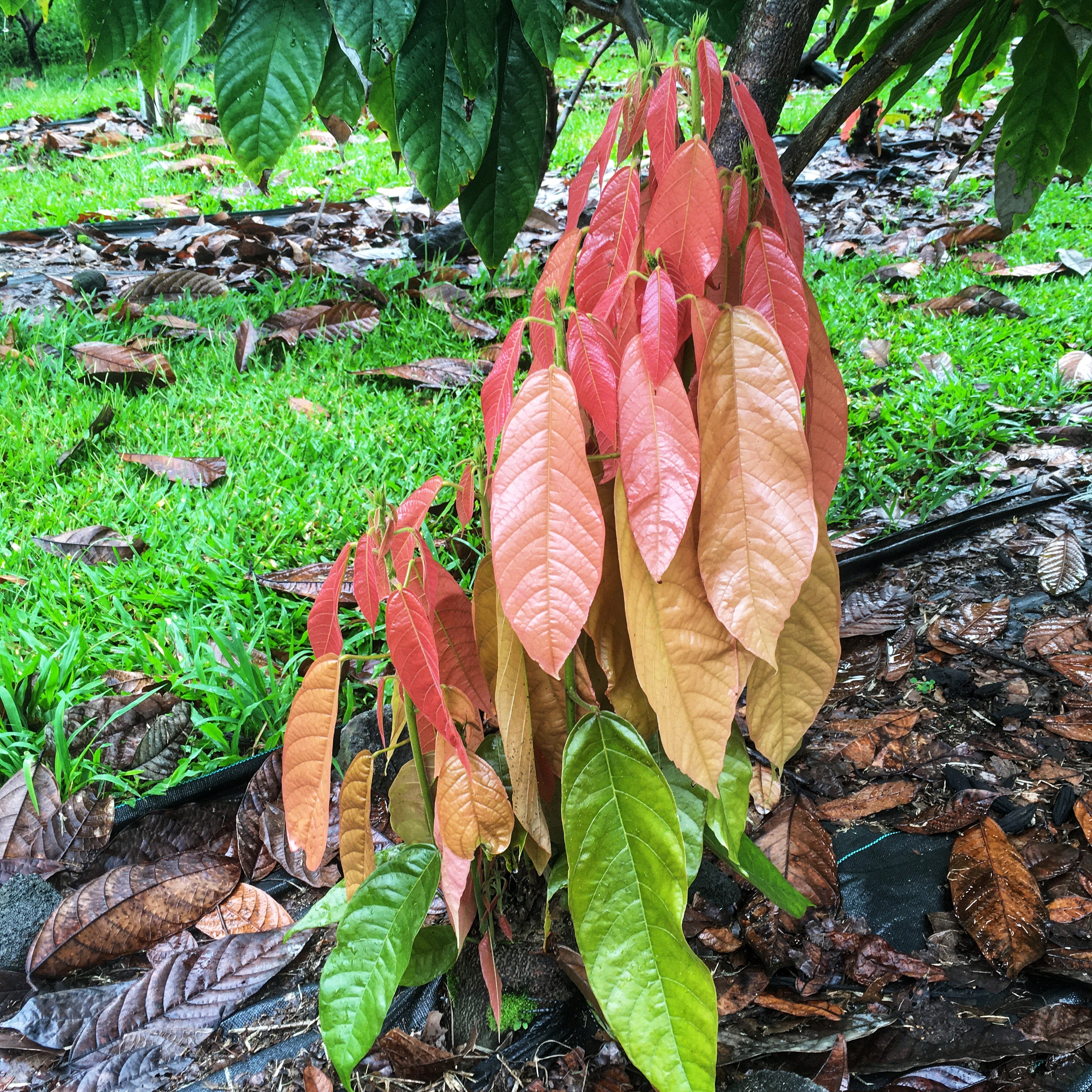
Harvest young leaves that have not yet hardened off, and make sure to only use healthy leaves and brush off any insects you find. The papers above compare molecular properties of leaves at different stages of development, from tiny new leaves to full size, still soft leaves. While any of these makes drinkable tea, different stages of leaves have different chemical properties. The littlest, youngest leaves have more theobromine and caffeine by far, as reported in this paper. When I have made tea exclusively from tiny leaves, I definitely feel the alkaloid punch. Using varieties with leaves that are deeply red when young gives a beautiful color to the tea and healthy phytochemicals (probably xanthophylls and/or anthocyanins) along with it. I now mix tiny, potent leaves with larger (still young) leaves for a good balance. Experiment with what works best for you.
The processing protocols used in the papers sited above are based on green tea processing. Having experience processing C. sinensis tea, I see some differences. Cacao leaves don’t need a “kill” step and are too brittle for rolling or bruising. Simply pick young cacao leaves, allow to “wilt,” if desired, and dehydrate. The protocol in the Indonesian paper left the leaves to wilt a minimal time, 5 to 15 minutes. Leaves I harvest often wait a few hours before drying, due to convenience. I’ve also left them to wilt overnight. They don’t seem too picky. Perhaps a chemistry lab analysis would pinpoint optimal timing, but we’ll have to wait for someone to do that study.
Important note: After harvesting, I make sure to carefully inspect and rinse each leaf in water, since we have rat lungworm disease to worry about here in Hawai'i.
I sometimes chop the leaves into strips and sometimes leave them whole. I dehydrate the leaves on the lowest setting (105°F) until dry and crispy, usually a few hours, then store them in an airtight container at room temperature.
How do you brew cacao leaf tea?
I usually put a teaspoon to a tablespoon of leaves in a tea strainer (usually with other herbs) in a mug and pour about 10 ounces of hot water on it. I let steep, covered for 5-20 minutes then take out the strainer.
After long infusions, you may notice that the stream of liquid pouring from the strainer looks thick. This same thing happens with mamaki tea and indicates polysaccharide content. This thickness may seem odd, but it’s actually great. The polysaccharides are likely to be good for your gut microbiome. It also suggests that the leaves have demulcent qualities. To maximize the extraction of polysaccharides, infuse some leaves in room temperature water. In an hour or two, you will notice the water thickening. This quality is not too surprising for a Malvaceae family member.
I mix cacao leaves with many other herbs. My favorite combo is rose petals and yellow butterfly ginger flowers. The flavor of the cacao leaves makes a good base for chai spices. I also like them mixed with turmeric, black pepper, and noni leaf.
Where can I buy cacao leaf tea?
I don’t think anyone is selling it. If you have access to a “no spray” cacao tree, it’s easy to harvest and dry leaves yourself. If you don’t have access to a tree and want to try, let me know.
Any other questions?
When you try cacao leaf tea, I would love to hear about your experience! If you have more info about using cacao leaves for tea or medicine, I am interested in hearing about that, too!
Great to find your story! I forgot about the power of cacao leaves... i am growing cacao in Thailand! Will have to dry some leaves and make tea!
I'm going to give it a go in Belize. We already dehydrate pineapple, hibiscus and moringa at our cocoa/vanilla farm.