

Grainy Chocolate
If you are grinding chocolate without a melanger or if your melanger breaks at the beginning of a batch, what can you do with partially refined chocolate?

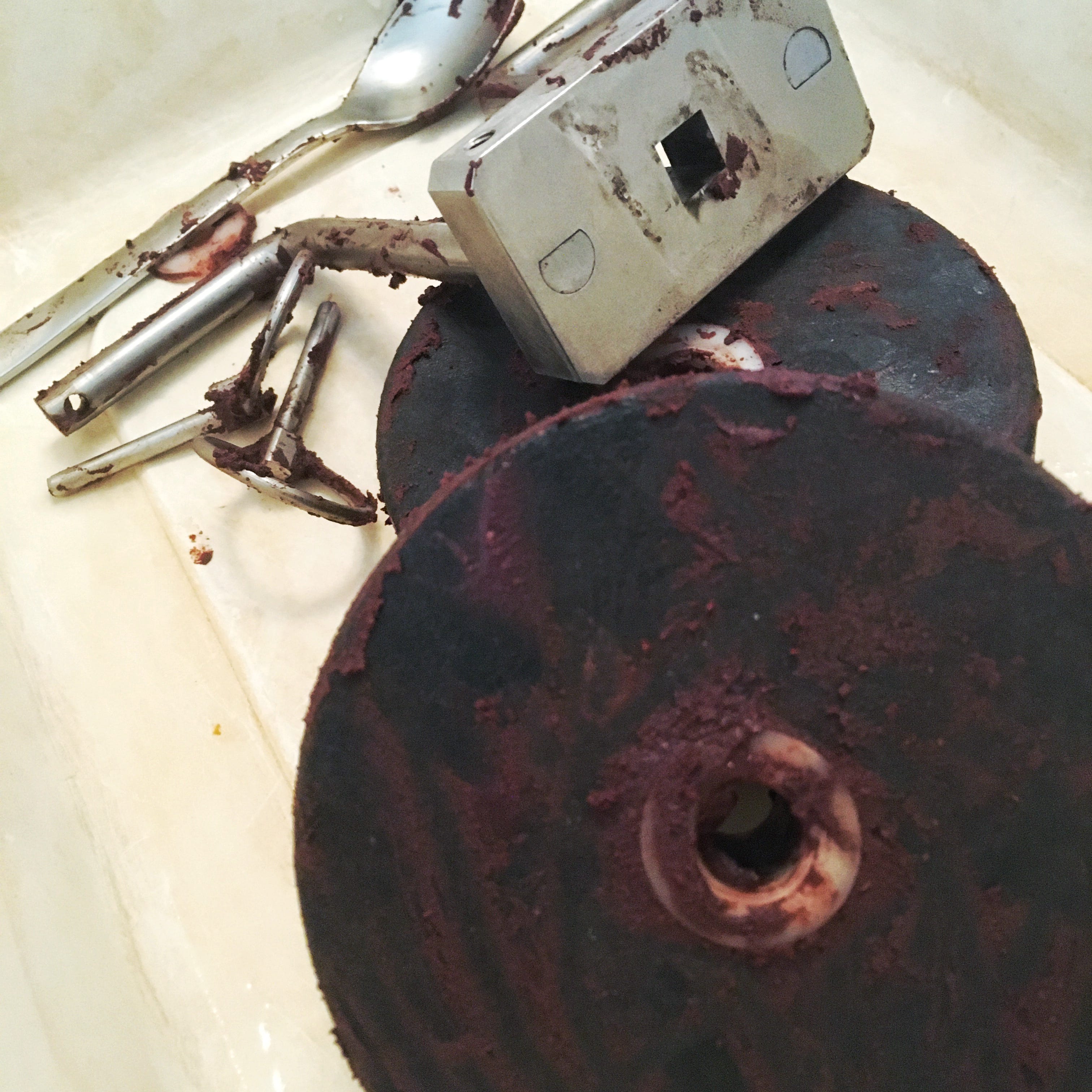
I realized something was wrong at a half an hour past bedtime, the darkest time for me as a morning person. “I’m giving up chocolate making,” I murmured as Jeremy agreed that I needed to abort the grind I had just started. The melanger motor was working too hard and the chocolate was coating the wheels too thickly. Ugh, was it seizing? Too hot and humid? The meter showed 80°F and 80% humidity. Well, I was too tired to troubleshoot, and I couldn’t leave the problem unattended overnight, so I sadly turned off the machine, decanted the chocolate, and left the mess for the morning when I’m much more chipper.
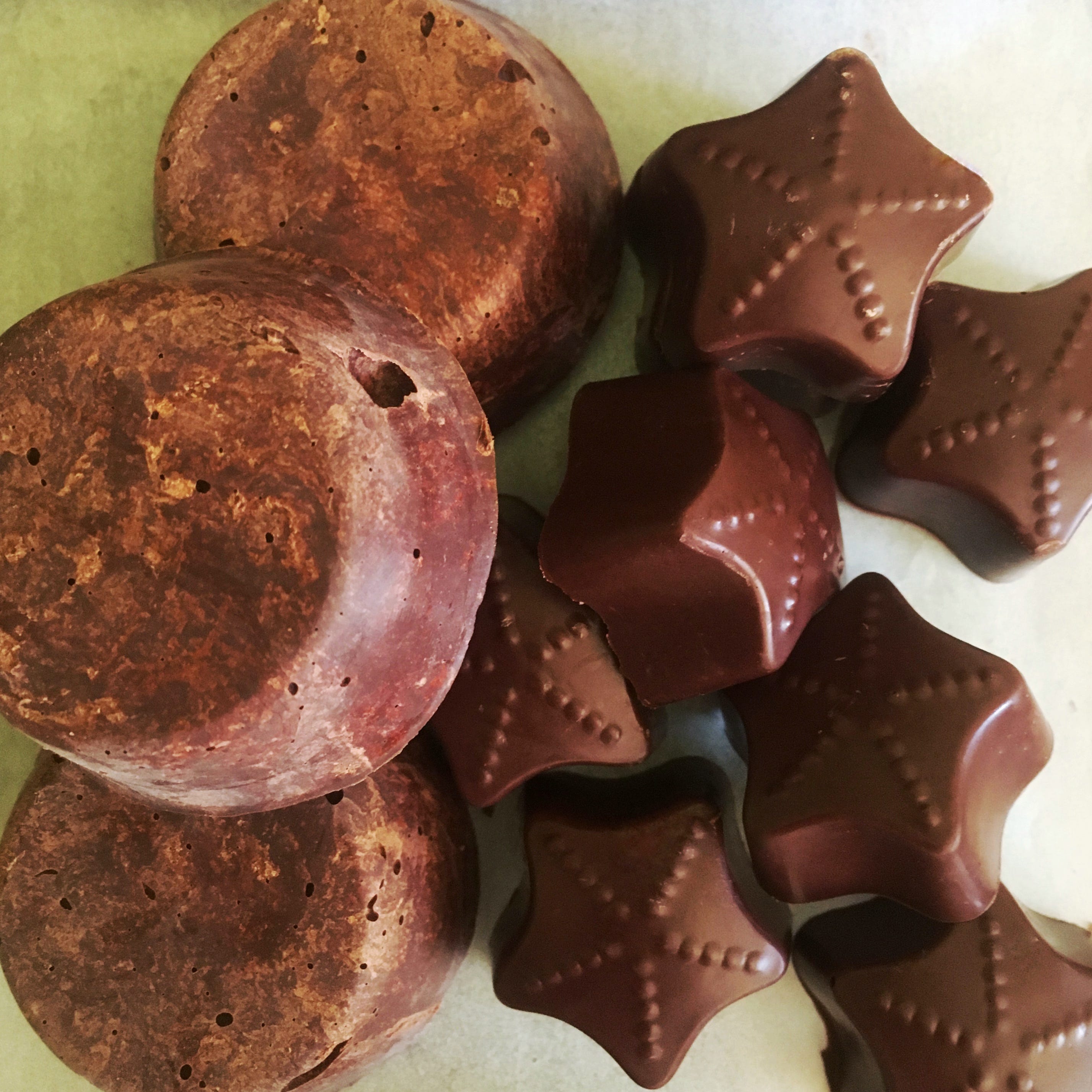
The decanted chocolate was partially refined, smooth enough to flow but containing gritty bits of nib. Fortunately the flavor of this batch of nibs is particularly well-balanced and delicious, the type of nibs that don’t need a boost from days of refining. The sudden realization that I could experiment and write about textured chocolate brightened my outlook. Not only is rougher-than-smooth chocolate an outcome of a partial melanger grind like this, but it is the typical result from using a manual grinding method (like a mortar and pestle or a metate and mano) or a kitchen appliance (like a coffee grinder or a food processor). Chocolate with tiny nib bits is not wrong chocolate or poorly executed chocolate, it is just different. This style has deeper roots than butter-smooth European style, and many people prefer it.
I developed a new appreciation for rough ground chocolate as I played with this batch. I found that the grainy texture made very dark chocolate (100% in this case) more expected. The texture somehow matched the savory character.
Below are my favorite recipes I tried (so far) with this batch of chocolate. Of course, you can try partially refined chocolate in almost any way you would use smooth chocolate. If I were to expand my list, I would make cookies and other baked goods, caramel, ice cream, iced drinks, popsicles, and nut clusters. Perhaps I’ll get to all of these in the coming weeks. Let me know what your favorites are!
“stone ground” chocolate
I call this style of not perfectly smooth chocolate “stone ground,” because that is what Taza Chocolate, the most famous maker of gritty chocolate, calls it. Of course, perfectly smooth chocolate can also be stone ground, melanger machines use granite stones to smash the nibs, but the connotation of this term suggests a rough and handmade product. I noticed in their website that Taza also calls this style “perfectly unrefined,” which reads to me as a quiet and welcome rebellion against the current fashion of perfectly smooth chocolate. Taza credits Mexican drinking disks as the inspiration for this style, a style that has been around for thousands of years compared to a couple of hundred for smooth chocolate.
Chocolate with gritty nib texture is its own style, and important to appreciate without expectation of European style unctuous texture. I love it for its rustic feel, but to be embarrassingly honest, I have been trained out of wanting to make this style. After taking so many classes to learn the art of creating fashionably impressive style of chocolate, I have to constantly remind myself that there is no best, just individual taste preferences.
Excited for an opportunity to embrace this rustic chocolate style, I tempered some of the chocolate like usual, using the cocoa butter silk method. I made it both with and without sugar. When I used sugar, I first ground it in a mortar and pestle to mitigate the sugar crystal sharpness. This worked fine, but I’ve seen some sources recommend powdered sugar. The rough-ground chocolate was thick, but could be thinned with cocoa butter as needed. Tempering and molding were no trouble.


The result is similar to a Taza chocolate bar. Especially with some powdered spices mixed in, the chocolate is delicious. The nib bits are crunchy and beware the bits of radical (the hard bit of sprout in each bean). I imagine they could crack a tooth if not carefully chewed. When I use nibs in confections, I usually pick out the radicals for this reason.
cocoa tea balls
The gritty texture of the chocolate is perfect for a drink fashioned after the Caribbean’s famous cocoa tea. While most traditional chocolate has some grit, I love the way many Caribbean residents embrace tiny nib pieces as a feature not a bug. When boiled in hot water, the niblets become softer and chewier. It’s not appreciated be everyone, but I am a huge fan. Chewing a drink is so satisfying.
The day after the grind failure, the chocolate was still soft. I scooped out 100 grams and added:
10 grams powdered cinnamon
2 grams powdered ginger
a pinch of chili pepper
a pinch of Kona sea salt
I didn’t need to add heat to mix the ingredients together, but I could have if the chocolate had solidified. I scooped out 25 gram portions into a silicone muffin mold. In a few hours, the “balls” had hardened. I boiled a sample (maybe 20 grams of spiced chocolate?) with about 1/3 cup water and about a tablespoon coconut cream for a few minutes, making sure the chunks of chocolate were melted. It was thick, spicy, and, just like good Caribbean cocoa tea, chewy. Because of the thickness of the drink, the bits did not all settle to the bottom, which made each sip a textural delight. I later made a thinner drink, more like typical cocoa tea with the nib bits settling at the bottom.
Traditionally cocoa tea balls are unsweetened and the preparer sweetens to taste while making the drink. I like unsweetened drinking chocolate, but you may prefer to add your favorite sweetener.


chocolate porridge
Each morning while other people may be sipping a smoothie of some kind, I enjoy a chocolate drink with spices and chia seeds. This textured batch of chocolate fit in easily. Bits of nib are not noticeable when other chewy things are added, like in my morning drinks or in a porridge.
Pairing chocolate with a foundational food, like rice or corn, into porridges is common in cacao growing regions. The combination is delicious, filling, and energizing. Corn is perhaps the most traditional in Mesoamerican cuisine, along with amaranth. Rice and oatmeal are also fantastic choices. My current favorite is chia seeds, so here’s a recipe for chia-chocolate porridge:
3 tablespoons chia seeds
20 grams 100% partially refined chocolate
1/2 cup coconut milk
1/2cup water
Seeds from 1 green cardamom pods, freshly ground
1/2 teaspoon rose water
1/4 teaspoon vanilla extract
pinch of sea salt
sweetener to taste
Put all ingredients in a saucepan and simmer for about 10 minutes or until the chia seeds have absorbed most of the liquid. Stir occasionally to break up chia seed blobs and melt chocolate. Adjust sweetness to taste.
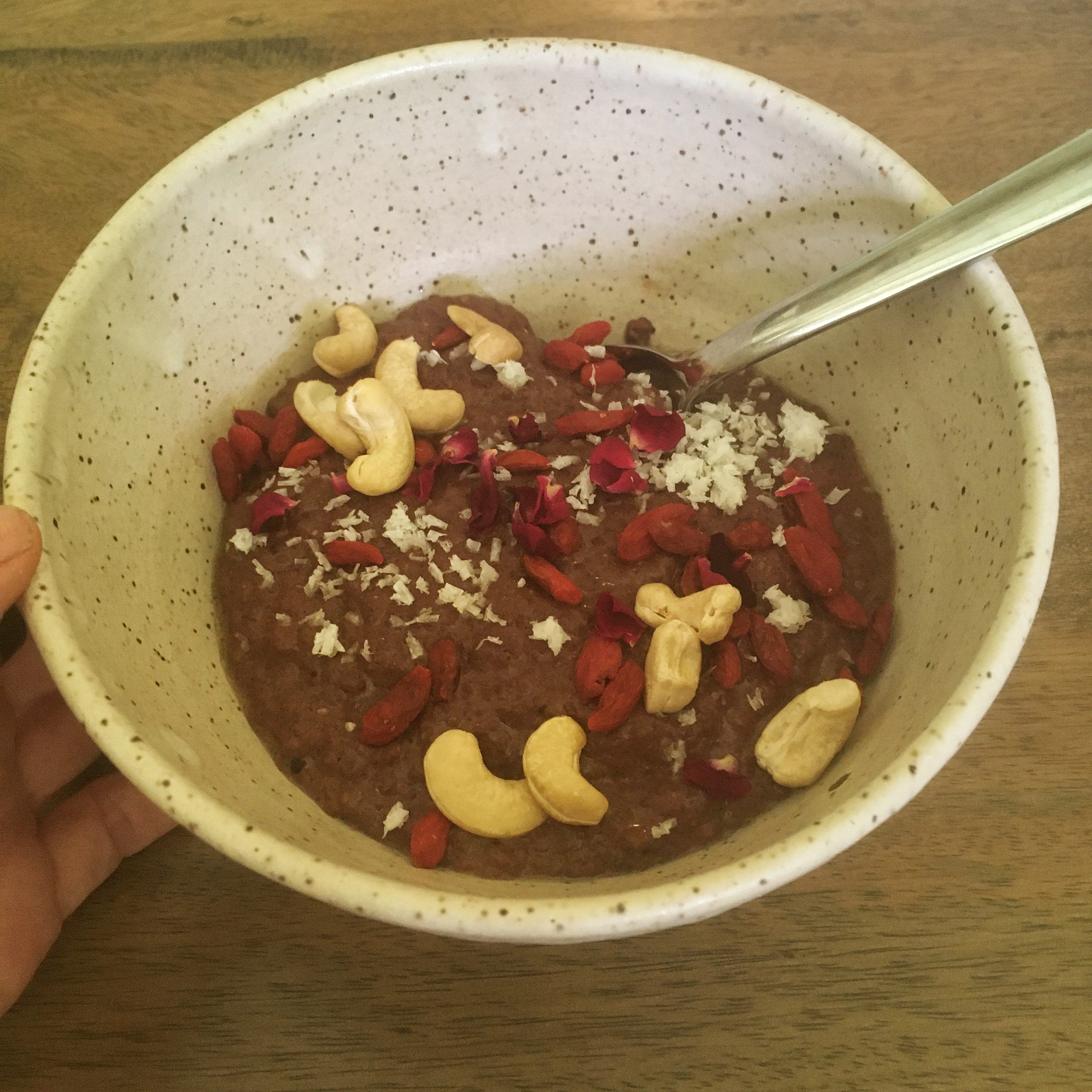
I’ll often play with the spices and add toppings like nuts and fruit. Cinnamon, bananas, Surinam cherries, yellow ginger flowers, and coconut are some of my favorite additions from the yard.
Chocolate chia porridge is my go-to meal to pack. It can be made the night before and easily transported in a Mason jar. It is easy to eat, filling, and energizing. The tiny nib bits in the partially refined chocolate are a lively complement to the chewy seeds.
mousse
You can make this mousse completely to taste. Here’s the recipe I made for 2 servings of a barely sweetened, rich treat.
100 grams freshly squeezed coconut cream
18 grams 100% partially refined chocolate
6 grams coconut sugar
Heat all of the ingredients just enough to melt and combine. Stir or whisk to help it along. After it is combined, refrigerate for a few hours for a rich mousse. Depending on the fat content of the coconut cream, you may need to freeze. When I used fresh, homemade coconut cream for this recipe, it created a wonderful texture after a couple hours refrigeration, but when I repeated the recipe with canned coconut cream I needed to put it in the freezer for about a half hour. Also, the flavor with canned coconut cream is great, but not quite as fresh and delicious as with fresh.
This recipe is not about covering up the texture of the chocolate, but about featuring it. The tiny nib bits combine with the fresh cream taste to lend a fun cookies-and-cream vibe.


in case you are wondering… what happened with the grind?
Partially refined chocolate is awesome, but it wasn’t what I was going for. What happened to make me stop this grind? The short answer is: I’m not sure.
Well, certainly the melanger’s belt needed replacing. It still had the original belt after many years of use, and it sometimes slipped when the machine was working hard. The chocolate did not completely seize, but it may have been thicker due to moisture. This could be from taking on water from the humid air or nibs that may have reabsorbed moisture after roasting (not likely, since I pre-grind and warm them before adding to the melanger). I sometimes do find that batches of beans make thicker liquor for unknown reasons. I wonder if some beans are lower in cocoa butter, since adding some cocoa butter usually helps to thin it out. In retrospect, I probably could have rescued this batch be adding cocoa butter and by adding the nibs more slowly. Every batch is a learning experience, even after so many!

From what seemed like a crappy situation in the darkness of night, turned out to be a fun opportunity for experimentation and for enriching my chocolate experience. I was reminded of how much I appreciate rustic chocolate in addition to the perfectly smooth styles. I am once again grateful to find that chocolate is so much more than just a hobby; cacao can reveal many life lessons through its deep and layered intricacies.